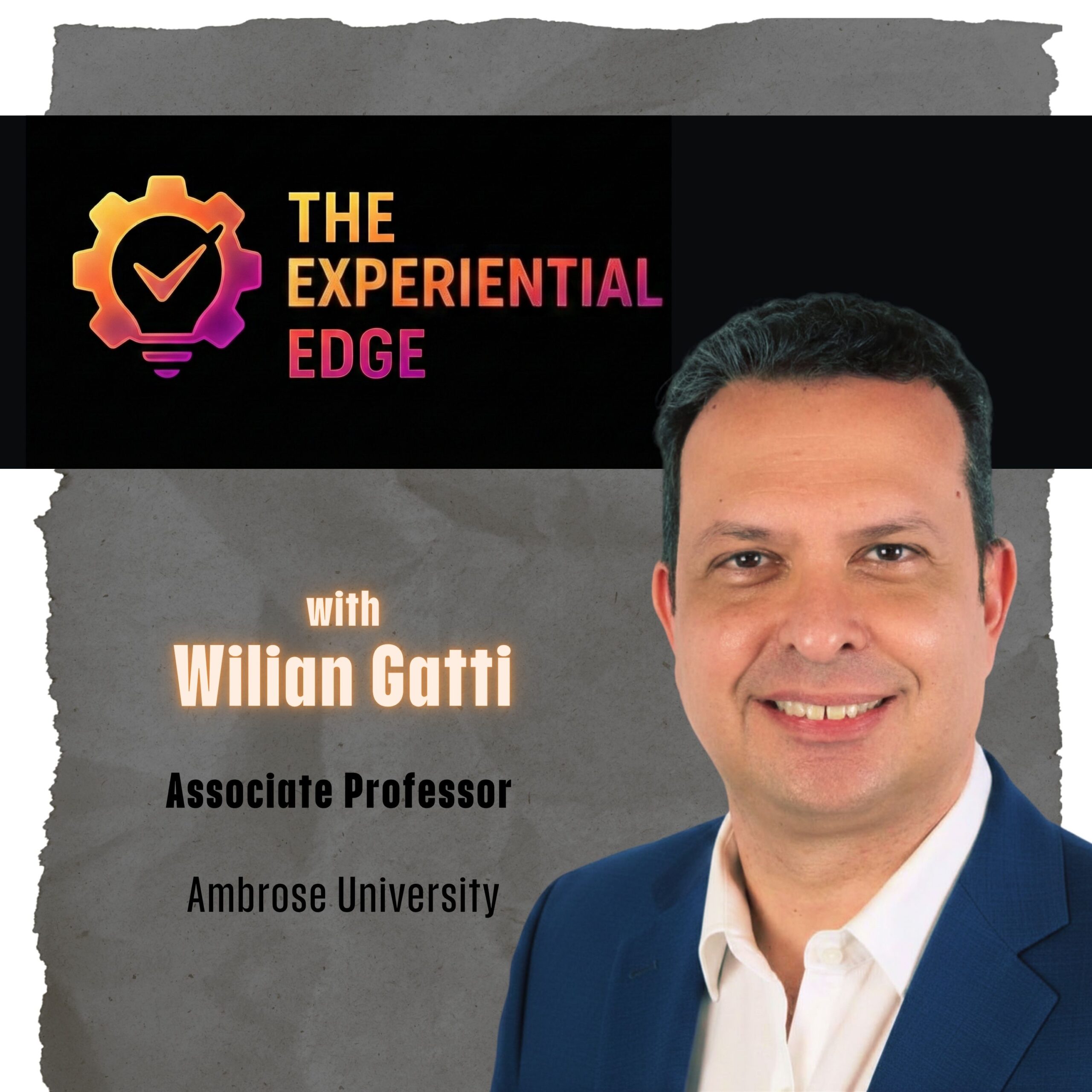
Episode 7 – Designing Games for Deeper Learning
Summary
Unlock the power of board game design to revolutionize your teaching. Discover how students building their own simulations can deepen understanding of complex systems, decision-making, and social issues beyond traditional methods. If you’re an educator seeking innovative ways to foster strategic thinking, creativity, and engagement, this episode reveals a game-changing approach you can implement today.
We delve into how board games emulate real-world systems without the need for coding or expensive simulations. Wilian Gatti, expert in educational game design, explains how students learn to analyze market dynamics, social inequalities, and ethical decision-making by creating and testing their own games. You’ll explore the unique combination of system thinking and design thinking embedded in gameplay and why they make for powerful pedagogical tools.
Takeaways
- Board games simplify complex systems, making them easier to understand.
- Designing a game requires selecting key variables that explain the system.
- Creating a game involves integrating design thinking and system thinking.
- Students learn better when they create and redesign games, fostering ownership.
- Games can reveal social issues and ethical considerations not easily discussed otherwise.
Chapters – Episode 7 – Designing Games for Deeper Learning
- 00:00 The Power of Experiential Learning in Education
- 06:58 Integrating Game Design into the Classroom
- 13:53 The Impact of Board Games on Student Learning
- 21:56 Fostering Creativity and Critical Thinking through Game Design
- 30:03 Empowering Student Voices through Game Creation
Podcasts
-
Episode 10 – Using controversy as a teaching tool
Summary This episode explores the importance of experiential learning in…
-
Episode 9 – Accounting in Action: Making Precision Practical, Playful, and Real
Summary This episode explores innovative experiential learning techniques in accounting…
-
Episode 8 – From TikTok to Strategy
Summary This episode explores how experiential learning can enhance student…