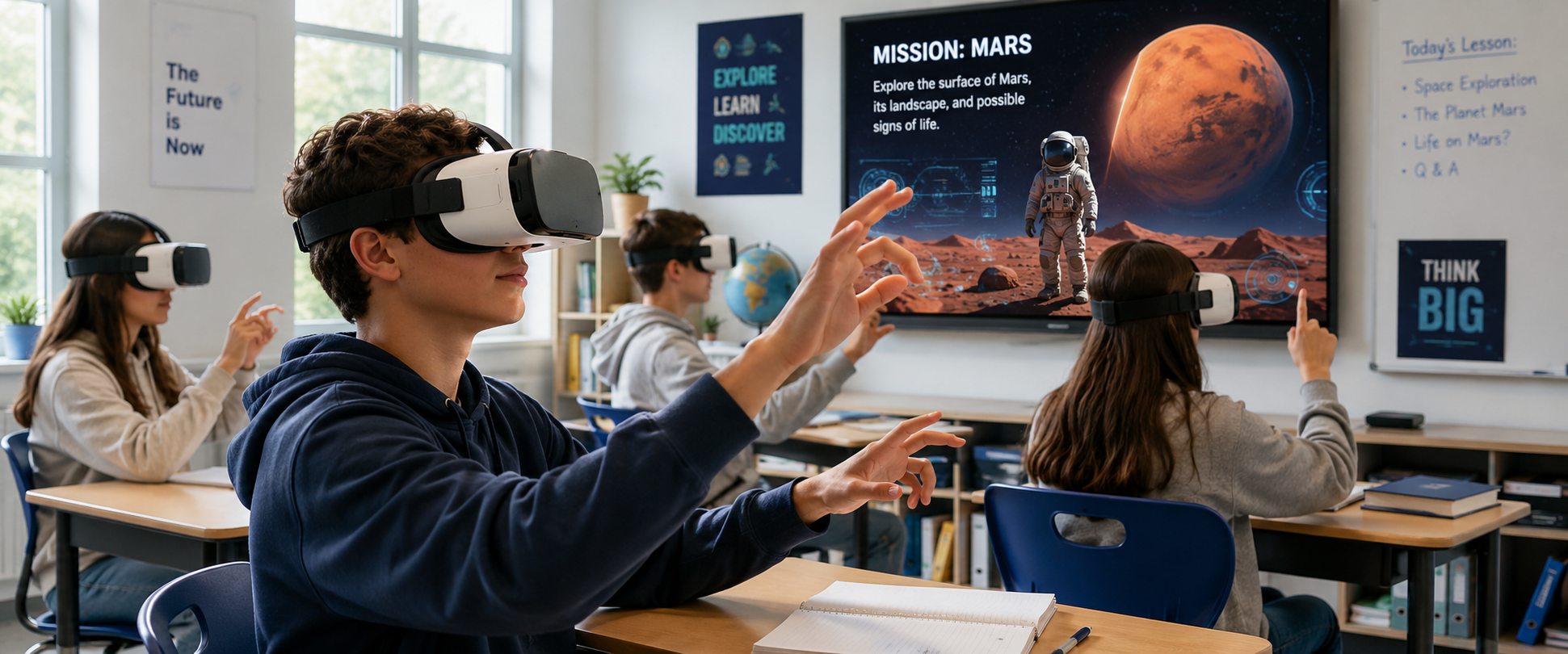
How to Enhance Learning with VR
Insights from an Innovative Educator
As educators, we constantly seek ways to enhance learning and engagement in our classrooms. One innovative approach that has gained traction is the use of Virtual Reality (VR) in education. But how does it actually work in practice? In this post, we’ll explore the insights shared by Jennifer Hainsworth, a business instructor at Olds College of Agriculture and Technology, on implementing VR to create immersive learning experiences.
The Challenge of Traditional Teaching
Traditional teaching methods, such as lectures and case studies, often fall short in preparing students for real-world challenges. Jennifer identified a key issue: while students could articulate concepts, they struggled to apply them in complex, ambiguous situations. This gap prompted her to explore VR as a means to bridge this divide.
Implementing VR in the Classroom
Jennifer’s journey with VR began unexpectedly, inspired by her children’s experiences with the technology. She decided to integrate VR into her Operations Management course, leveraging a NASA-created simulation of the International Space Station. This innovative approach aimed to teach critical thinking skills through immersive, gamified experiences.
The VR Setup
Due to budget constraints, Jennifer split her class into groups. One group operated as “Mission Control” using traditional classroom settings, while the other group donned VR headsets to simulate astronaut experiences. This setup allowed students to engage in real-time decision-making, mirroring the complexities they would face in the workplace.
Learning Outcomes and Reflections
The introduction of VR had a profound impact on student engagement. Despite initial hesitations from some students, many found the experience exhilarating and valuable. The immersive nature of VR forced students to confront ambiguity and make decisions under pressure, skills crucial in any business environment.
Jennifer emphasized the importance of reflection following the VR sessions. Students were asked to analyze their experiences and connect them to real-world applications, fostering deeper understanding and retention of critical skills.
💡Key Takeaways
- Embrace Innovative Technologies: Educators should not shy away from integrating new technologies into their teaching. Even without a large budget, creative adaptations can yield substantial benefits.
- Focus on Critical Skills: Identify essential skills for your subject area and design experiential learning activities that target these competencies.
- Encourage Reflection: Post-experience reflections are crucial for students to articulate their learning and connect theoretical concepts to practical applications.
- Foster Collaboration: Use group dynamics to simulate real-world business environments, encouraging teamwork and communication.
Conclusion
Jennifer Hainsworth’s experience illustrates the potential of VR in higher education. By stepping out of traditional teaching boundaries and embracing immersive technologies, educators can create impactful learning experiences that prepare students for the complexities of the real world. As you consider your teaching strategies, think about how you can incorporate innovative approaches to enhance student engagement and learning outcomes.